
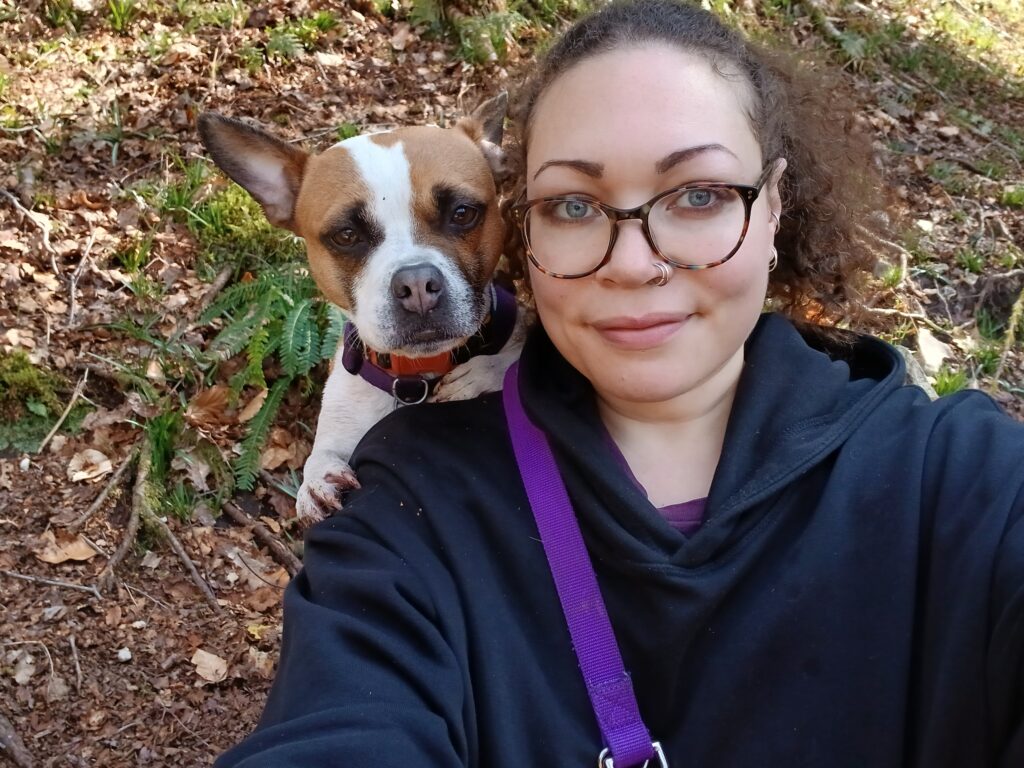
Can you tell us about your journey into animal welfare, and how your first dog, Sophie, shaped the path you’re on today?
I felt slightly adrift in my twenties after finishing a degree I would never use and working in hospitality for several years. On my 26th birthday, I adopted Sophie, a young staffie cross from Margaret Green. I had never lived with a dog before and was extremely naïve about what dog ownership would look like. Sophie was a fantastic, loveable, bright and energetic character, but “clingy” and highly frustrated when unable to access other dogs.
My quest to understand Sophie better led me to the fantastic Nat Light of “Natalie Light Dog Training and Behaviour” and PACT. Nat’s advice and support empowered me to help Sophie tremendously, improved our relationship and started me down a canine behaviour and training rabbit hole that led to returning to college, volunteering and later working at the RSPCA Solent Branch, and the rest is history.
You’ve worked with organisations such as Battersea, Dogs Trust, Blue Cross and Support Dogs UK. What have those experiences taught you, and how have they shaped your approach to animal care and welfare?
I have been extremely fortunate to work for so many amazing animal charities. Throughout my career, I have been an Animal Care Assistant; Dog Trainer; Rehoming and Welfare Coordinator; Canine Behaviour and Training Advisor; Post Adoption Support Behaviour Officer and most recently, a people manager within rescue. This broad experience means I can help bring industry-led best-practice to Little Valley. I can also understand, evaluate and advise on the animal journey holistically, from pre-intake to post adoption and everything in between. This is a valuable skill when you have accountability for responsible, welfare-minded decision making.
You’re continuing your studies in applied animal behaviour. How does that specialist knowledge influence the way you understand and support dogs in a rescue environment?
What we understand of canine behaviour is always changing, so it is vital that we keep as up to date as possible to ensure the best welfare outcomes for animals in our care. It is no surprise that the kennel environment can significantly compromise welfare. As behaviour is the main indicator of welfare, ensuring we have an ongoing, daily observational model to gather behaviour data and continually assess against is key. Welfare tends to deteriorate the longer the stay in kennels, so I heavily encourage a daily, varied enrichment programme for all dogs, as well as bespoke training plans from day one to reduce stress and boost rehomability.
From your experience, what are some of the most common behavioural challenges seen in rescue dogs, and how can the right approach make a lasting difference?
I feel the industry has seen a sharp rise in generalised anxiety and overall lack of emotional resilience. In a fast-paced and ever-changing world, dogs who lack resilience can find even the most seemingly routine situations completely overwhelming and insurmountable, which can lead to chronic distress resulting in behavioural fallout. The most common reason a dog will be surrendered to rescue is behaviour, with the most common behavioural issues being separation-related distress, dog reactivity and people reactivity. This has been trending up for several years, but has been accelerated by Covid where we saw a rise in unsocialised imports, acquisition of dogs bred for “supply and demand” rather than to produce puppies of solid, sound temperament, and accidental litters rising from delayed neutering.
In terms of helping the dogs we already have, education and signposting to the right support is key. Understanding the individual behavioural needs of a dog will help us to determine the best course of action to promote welfare. In terms of the future, I would love to see stricter legislation and enforcement around unethical breeding practices.
As Deputy Shelter Manager, what are your key priorities when it comes to supporting the team and ensuring the highest standards of care for the animals?
Whether you are dealing with people or animals, the first step should always be building a good relationship. I am prioritising building trust, embedding myself within the team and learning the ins-and-outs of Little Valley. Once I have a better understanding of the team’s key strengths, interests and possible areas for development, I can focus on providing opportunities to facilitate that development. A motivated, experienced and cohesive team will naturally result in consistent high standards of animal care and welfare, so building a solid foundation within the team will have a positive knock-on effect regarding animal welfare.
Coming into Little Valley, what have been your first impressions of the shelter, and what do you think we’re already doing really well?
There is so much potential for growth! Little Valley is uniquely placed as one of the last remaining large brick and mortar animal shelters in the area and already has a solid presence within the community. Little Valley’s Trap, Neuter, Return (TNR) programme really impressed me, as historically I only associated this service with Cat’s Protection. With the high number of “inbetweener” cat colonies in the area, this service is essential for cat population and infection control.
With your background and experience, are there any areas where you see opportunities for growth or improvement, or new ideas you’re excited to explore?
There are great opportunities for specialised development, particularly with community engagement and education. The new, specialised rabbit and guinea pig unit is currently under development, so opening this facility would be a great time to launch a public education programme around responsible rabbit care. I am also keen to ensure our team are all subject matter experts regarding welfare and behaviour. Species-specific training for this was already underway when I joined Little Valley, which is great!
Animal welfare is always developing as we learn more. How important is it for shelters to keep evolving, and how can that benefit the animals in our care?
Innovation, development and keeping up to date with best practice in the animal welfare sector is essential. In the comparatively short time I have been in the sector, I have seen a complete overhaul in routine care and practice. I remember when closing blocks to the public, operating to optimal occupancy rather than full capacity, and tailored rehoming matching rather than animals being picked out by adopters were all controversial changes; now they are the industry norm.
Little Valley is set in a unique environment here in Devon. How do you think the setting, space and surroundings can support the wellbeing and rehabilitation of the animals?
From experience, working to rehabilitate any animal – but especially dogs – in crowded, built-up areas can prove endlessly challenging. You can struggle to avoid stressful triggers which can impact learning, welfare and rehomability. It can also have a detrimental impact on team wellbeing, as your attempts to set dogs up for success are constantly thwarted. Little Valley is off the beaten path, set in over 20 acres with multiple large, enclosed fields, a small woodland area, and a peaceful little stream running through it. Having multiple options for walking and socialising our animals means we can keep them mentally stimulated, choose the best environment for dedicated behaviour modification training, and enable staff to take multiple dogs out to different locations at once. When the major building works for the Warren and the new reception area are complete, we can return to utilising all areas of the shelter to support rehabilitation.
Finally, tell us about your dog Vespa. What’s she like, and what do you both enjoy doing when you’re not at work?
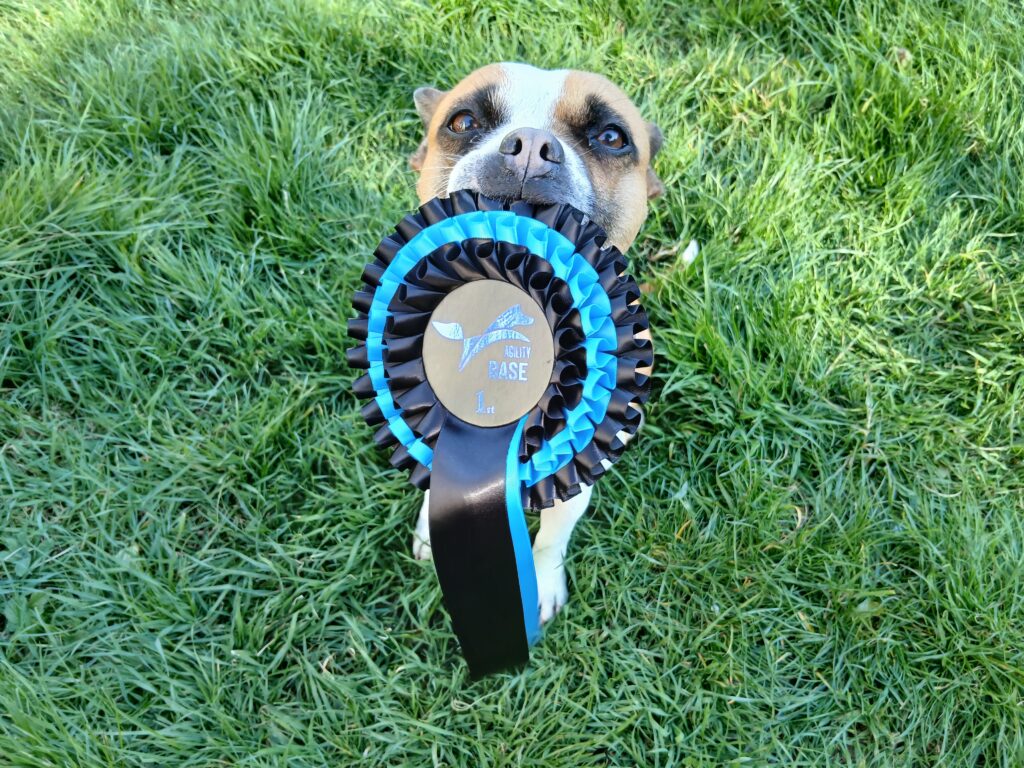
Vespa is a cracking little dog! She is a staffie cross who came into Battersea at 11 weeks old, pretty overwhelmed by life and needing a lot of gentle care, confidence building and life skills. She was originally going to be a temporary foster, but it only took 2 days for me to realise she wouldn’t be going anywhere! Vespa is now a social, fairly well adjusted five-year-old. We go on hikes and camping trips together as well as compete in agility; she is far more talented at it than I am! She is loving the Devon countryside and has slotted into life here brilliantly.